Conveyor belts, smelters, supply lines. Restore an industrial empire from the wreckage.
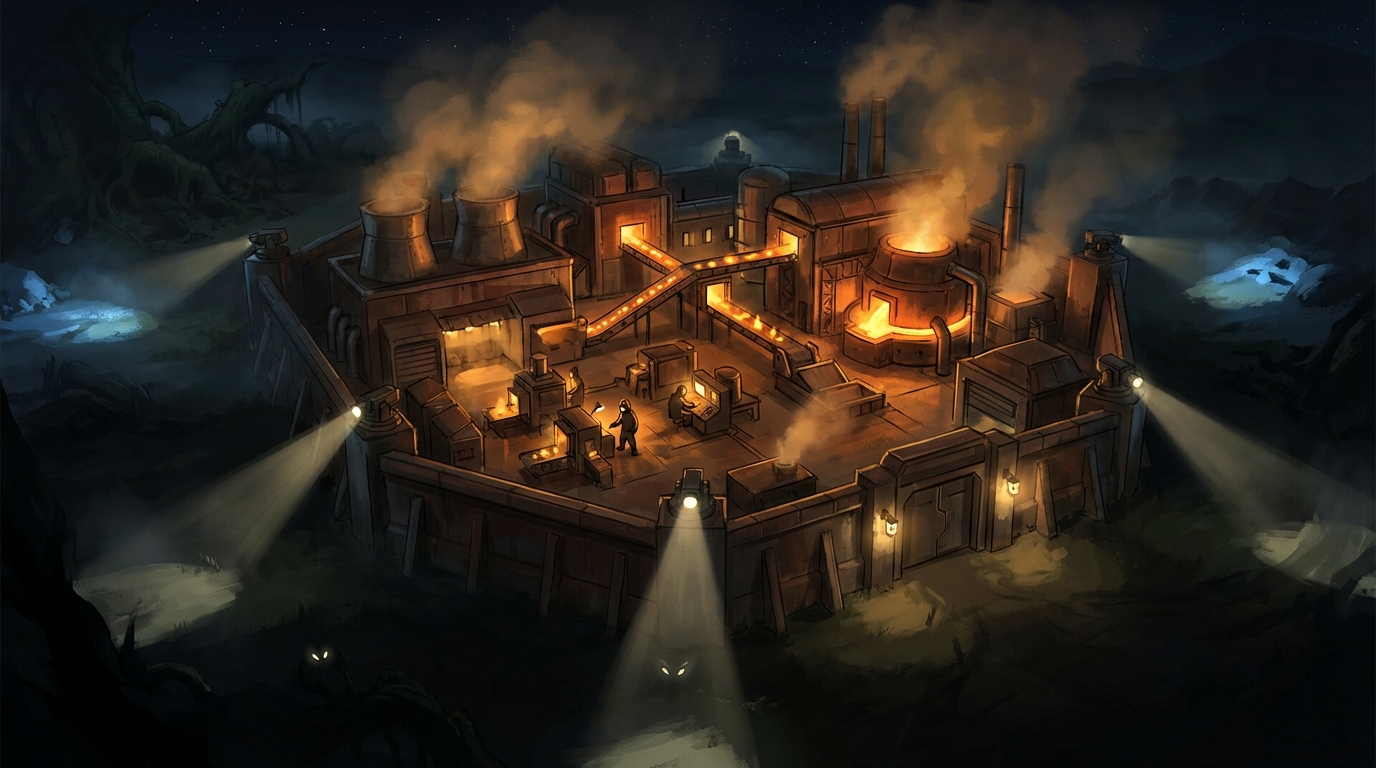
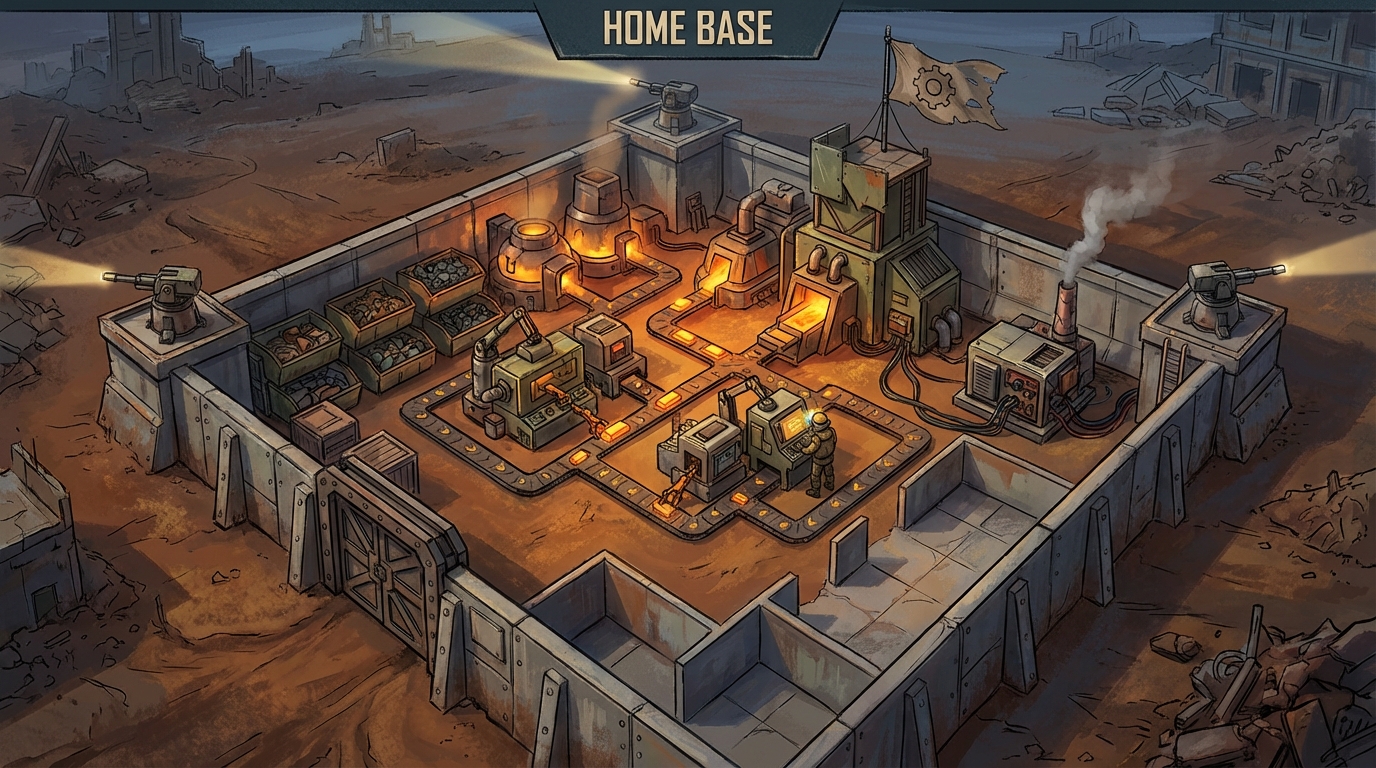
Home base is where you build. Place smelters, assemblers, splitters, and mergers on a snap grid. Route conveyor belts between them. Watch raw materials become weapons, armor, turret components, and high-tier building parts.
Intermediate goods flow in from your building network — ore from a foundry, circuits from an electronics plant, fuel from a refinery. Your job is final assembly. The factory floor is yours to design, and bad layouts cost you when a wave hits and your ammo line is backed up.
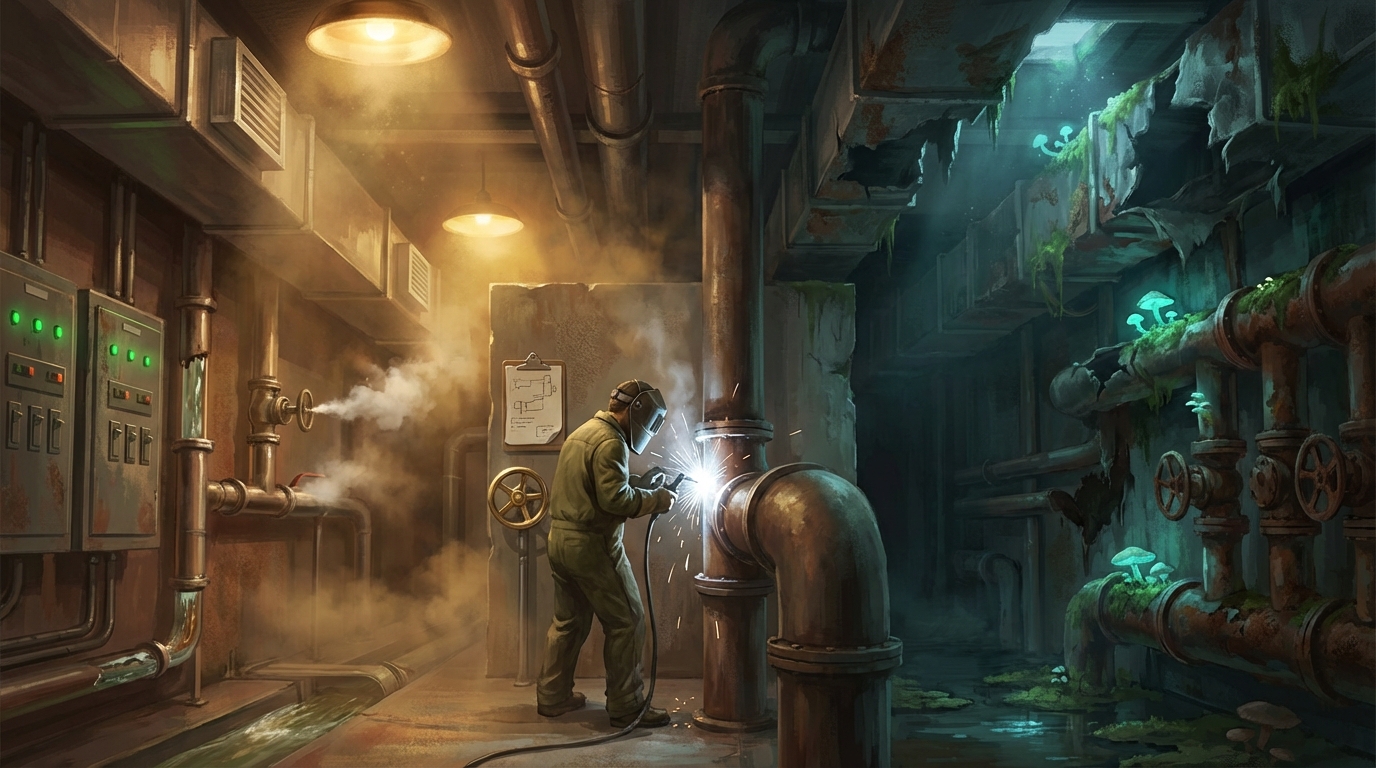
Every building in the Slopworks complex is modeled from real BIM data — actual duct layouts, actual pipe routing, actual mechanical rooms pulled from building blueprints. When you enter a wrecked power plant, the boiler room has the pipes where a real boiler room would have them.
Repair the MEP systems — mechanical, electrical, plumbing — to bring each building back online. Reconnect severed ductwork. Replace blown electrical panels. Patch corroded pipe runs. Different building types produce different outputs: power plants generate electricity, foundries smelt ore, chemical plants process compounds.
No two buildings feel the same, because none of them were designed the same.
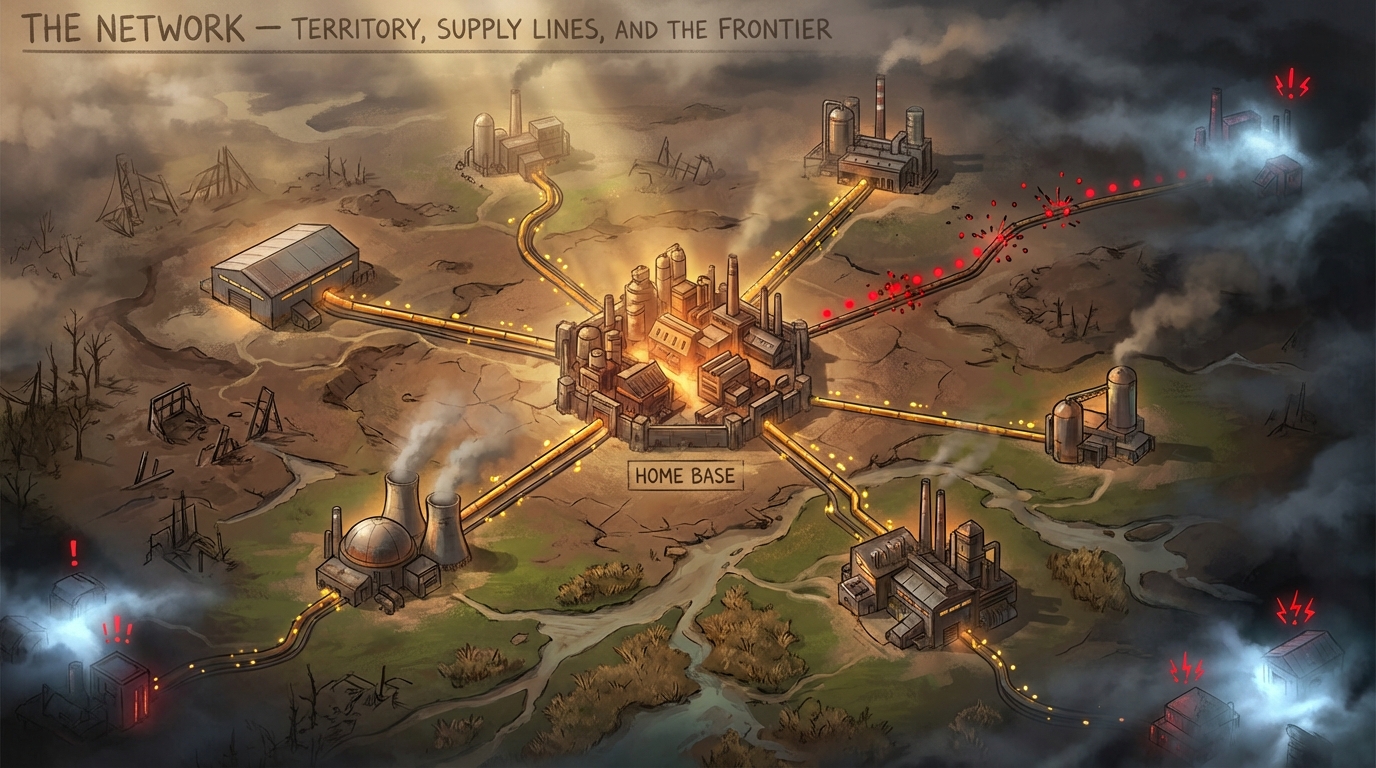
Each restored building becomes a production node on the overworld map. Connect them with supply lines — physical routes that carry materials between facilities. A foundry feeds ingots to your base. A power plant keeps the grid running. A chemical plant supplies the ammo line.
Longer supply lines are more vulnerable. Fauna patrol the gaps between buildings and will attack exposed routes. You choose what to defend and what to risk. Expanding the network increases the global threat level — more territory means harder waves, more aggressive creatures, more ground to cover.
The furthest buildings have the best resources. They're also the hardest to hold.